
What Is Drop Shipping & How It Works?
All you need to know about drop shipping.
What Is Drop Shipping?
Drop shipping is a form of eCommerce online store where a store doesn’t keep the products it sells in stock. Instead, when a store sells a product (at retail price), it purchases the item from a third party (at wholesale price) and a third party ships the product directly to the customer under the store’s trademark.
How Does Drop Shipping Work?
Drop shipping business works like any other online shop, but it is much more convenient for retailers as it saves you money you’d need to invest in keeping the inventory as well as time and efforts to ship the goods and deal with customer service.
Here is an overview of how the drop shipping transaction looks like:
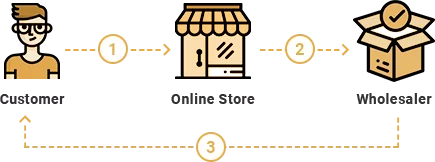

A visitor arrives at your online store, browses products, selects the one, places the order and makes a payment for a product at a retail price.

You receive the order and either manually or automatically you forward the order to the product supplier and make a payment for the product at the wholesale price.

You receive the order and either manually or automatically you forward the order to the product supplier and make a payment for the product at the wholesale price.
Benefits Of Drop Shipping

Low Costs
With the drop shipping model, you don’t have to purchase a product unless you already made the sale and have been paid by the customer. You don’t have up-front inventory investments or costs of managing a warehouse, which enables you to start your eCommerce business with much less money.

Wide Product Selection
Since you do not have to pre-purchase the products you sell on your dropship website, you can offer a wide selection of products to your customers. Listing many products on your website does not cause any additional costs to you, as long as the supplier has it in stock.

Info Box
Since you don’t need to invest a lot of money in inventory and warehouse, the risk involved in starting drop shipping online store is dramatically reduced. In case your business does not go well, you will not be stuck with thousands of products in inventory that you have to sell at a loss.

Location Flexibility
Because you don’t need to run a warehouse and to physically manage your products, you are able to run a drop shipping business with your lap top from any location.

Highly Scalable
With a traditional eCommerce business, more sales mean more work for you to manage orders and complete purchases. Running a drop shipping business, most of the work to process additional orders will be done by product suppliers so you can expand your business and scale easily.
Ready To Start Your Own Drop Shipping Business?
Start fast with a ready dropshipping website now.